Friday, January 28, 2011

Fairweather Dresses 2010 Ottawa

on 7th Street, Brad Anderson (2010)


When a massive blackout plunged the city of Detroit in total darkness, a diverse group individuals take refuge in a bar. The population of the whole city has disappeared into thin air, leaving behind piles of empty clothes, cars left to themselves and threatening clouds that stretch mysteriously on the walls of the city. Soon the light of day begins to disappear completely, and the survivors, they realize that darkness hides sinister and murderous entity, and that only the desperate search for alternative sources of light can lead them to salvation.

We expected a lot from this "Vanishing on 7th Street", especially given the substantial filmography that behind him, which stand out in interesting films like " Session 9 "(2001), "The Machinist" (2004), "Transsiberian" (2008). It therefore seems almost inexplicable that an absolute decline of inspiration by a director who has proved far more able to handle the tension within well-constructed and original screenplays. The skilled directorial hand at times such as we see Hitchcock in "The Machinist", by which we are trapped in an early sequence, it switches off and fades away, simply "Vanishes", as suggested by the title. In the face of a subject rather intriguing that deliberately wants to revisit an issue somewhere between the apocalyptic horror (the disappearance of humanity at the hands of ill-defined entity "dark" who live in the shadows) the outcome of the film writing a script so full of potential, but is reduced to a reflection pseudosociologica of very little weight, reduced to a theatrical performance in a closed room (the bar "Sonny's" where the survivors took refuge). After a start that bodes well, enlightened by the excellent photo Uta Briesewitz, the film goes completely lost orientation and wrap it so convoluted and senseless end to a very unconvincing, but in line with altr'onde conduction and disorganized hebephrenic that Anderson gives the whole film. It does not help the cast, which sees a Thandie Newton unnecessarily hysterical and over the top especially in the early sequences, and above all Hayden Christensen parchment and unreliable since the sequence of its awakening in the skyscraper empty of human life (and only surviving only because, listen, listen, "saved" by two candles burning at his bedside during the night of the black out). Very good Jacob Latimore, James, the boy, whose performances are lost, however, very early in the foggy mists of a very little incisive film from any angle you look at it. Not to mention the suspense, non-existent, as well as dell'effettistica, trivial, which is merely to make us see long shadows (threatening? Come, no joking) who gather every so often on the walls of Detroit. It seems almost certain sequences of review of any "Boogyman" certainly did not want us to evoke a film of Anderson. "Vanishing on 7th Street" is a big hole in the water caused perhaps by a moment of grave crisis in art by a talented director, but in this case loses its compass showing they could not handle the matter nor narrative, neither the actors nor the setting, nor the technical equipment that would be available. Film definitely not recommended, although reluctantly. Director: Brad Anderson Screenplay: Anthony Jaswinski Photography: Uta Briesewitz Editor: Jeffrey Wolf Music: ; Lucas Vidal Cast: Hayden Christensen, John Leguizamo, Thandie Newton, Taylor Groothuis, Jacob Latimore, PJ Edwards Country: USA Production : Magnet, Errick Entertainment, Mandalay Vision Year: 2010 Length: 91 min .


Sunday, January 23, 2011

Pregnant, Held A Baby With Meningitis

Take me somewhere nice, of Pearry R. Teo (2004)


After becoming a professional photographer, Jared decides he wants to see his son that he never knew because the father decided to leave home when their son Jamie, who is now 8 years, was born. During their first meetings, it is clear that the years of separation makes their relationship very difficult and distant. But when Jamie begins to take a liking to her father's camera, creative and emotionally a new relationship begins. "Take Me Somewhere Nice" is the story of a father of a child and how love is a feeling very fragile to be kept alive, in a complex and chaotic world.

"Take me somewhere nice" is a short drama. Teo Pearry with us here to explore new paths of its visioning film, of all paths other than the two previous experiments horror, but on which dominates once again the issue of lost loved object. In the case of this short, this is the "loss of relationship, the bond between father and son. " Take me somewhere nice "is a film about the absolute and irreversible precariousness of the human condition, its fate depend on a unpredictable, and for this very dramatic. We could say that if the courts above, the villain was a specific character (the demon that takes possession of Julian in "Libera Me", and the Guardian of Purgatory, in "Children of the Arcana), and in this short Teo 2004, villain is the destination itself, which meet again eight years after a father and a son, a young man who works as a photographer, and a child of just eight years, then, causes a terrible accident, tear them apart again, and this time, definitely. "Take me somewhere nice" is a film that leaves no way to a relatively pessimistic view of the topic dell'irraggiungibilità object of love. It 's a film Heidegger, as it seems to want to tell us that our being-there in life is a being-there for Death. Teo is able to film all this density of interaction relationships, philosophy and drama of pathos, with a light hand, ie not be in a hurry to define boundaries, concepts, and categories. At times this film has a rather even the lightness of "The Amélie" Jean-Pierre Jeunet, 2001, even in bright pastel colors of photography (great stuff) by David E. Valdez. It 'just that moving light on issues such as heavy family drama of the breaking of blood ties and affection, the true, great strength of this film, plus the honor of being a short script built on a clean and without' use of dialogue. If we add further capacity, by Teo, to express his poetic experimenting with different genres, as well as the courage to confront the issue of pain without pretense holliwoodiane or hypocrisy, then "Take me somewhere nice" becomes really a little gem definitely worth mentioning to those who have a keen eye to the evolution of the creative mind of an artist, especially a director. "Take me somewhere nice" : short of remarkable artistic, philosophical knowledge. Director: Pearry R. Teo Screenplay: Pearry R. Teo Photography: David E. Valdez Special Effects and Make Up: Michael Peterson Sound Designer: Lisa Fowle Cast: Braxton Cole, Clint James, Shanna Brock, Frances Feld, Brian Mulligan, Jennifer Barry.Julia Altamirano. Country: USA Production: Ascension Pictures. Year: 2004 Length: 17 min .

Tuesday, January 18, 2011

Best Denver Glory Holes

Children of the Arcana of Pearry R. Teo (2003)


Gordion Ashton hires a young man named Steve because Preparing for a set of 6 Tarot made of human skin for a ritual that want to run on itself. The ritual involves sewing the Tarot cards on their skin. This will allow him to cross the border between life and death and to "see" the afterlife. But Gordion dies during the procedure and is sent to Purgatory where the merciless Guardian retrace his life, to decide whether to send him to heaven or hell.

Testing for Teo continues in this grotesquely macabre "Children of the Arcana, 2003, which still sees Layton Matthews (Gordion) as the protagonist. The film is a tribute to HP Lovecraft, as pointed out explicitly in the opening credits, and moods of the writer of the film refers Providence fairly obvious. The budget has also gone up and it captures the visual quality and care plans by a remarkable sequence, especially by some inspired shots of Matthews, in the opening sequence of the bar, when speaking with Steve. The photograph of Keith Collea lights so mellow but always well defined throughout the construction. The short reverberates its special charm, especially in his novel evokes the atmosphere of nineteenth-century Gothic. One is reminded of "The Strange Case of Dr. Jekyll and Mr. Hyde" Stevenson CL: laboratories where the mad scientist wants to try to look beyond the threshold of an unconscious that is not easily assigned by a mathematical equation; pseudoscentifici tools, syringes containing green liquid, but without the irony of a splatteriforme Stuart Gordon (perhaps the name "Gordion" wants to be a veiled tribute to the maestro Gordon? We do not know, but we are free to suppose). Here is, however, all the omnipotence of man (scientific, artistic, film), spread through his autopsy, his vivisection, represented by Purgatory hellraiser accessed by Gordion, just blinded by the promise that Almighty does to himself . And everything is very serious, not at all ironic, just like the way the Guardian welcomes Gordion, in the stillness of the stretcher paralytic autopsy, as we said. And once again the skin to become magic portal through which exceed the limit, the finitude of the human. From this point of view the sequences in which they affect the way Gordion rectangular pieces of skin with a sharp knife to apply them in their place the tarot Lovecraftian make an impression and gain their uncanny power that I think it is rare to find in other similar productions gender. E 'use of gore very park, measured, surgical, in fact. But when it occurs, this type of gore "bites" the inner eye of a spectator who would not expect to see each other in front of flat-spotted in one fell swoop this masochistic omnipotence. But not only this, we could say "trivial" Dodge horror-oriented to make the original testing of Teo. Even actorial performance, although canned in just 22 minutes, saying something interesting: the figure of the Guardian, always looming so omnipotent and in turn, is well built and evocative in itself a remarkable sense of claustrophobia, even in machinic way, manner, which moves in the narrow space of its morgue-purgatory. To summarize this second short Pearry R. Teo, highlights a talented and intuitive esprit, which certainly should be refined, but who can innovate the language of film disturbing, even within the limits of the microcosm indie they were born and grown.
Directed by: Reginald Teo Pearry Screenplay: Minh Ngurn, Pearry R. Teo Photo: Keith Collea Music Design: Lisa Fowle Special Effects and Make Up: Collea Kim, Edward Dick Cast: Layton Matthews, Frances Feld, Joe Jones, Arron Reamer, Marcus Longoni. Production: Aaquinas Productions, Ascension Pictures. Country: USA Filming Locations: Tucson, Arizona, USA. Year: 2003. Length: 22 min .

Saturday, January 15, 2011

Plasma Versus Lcd Reliability

Freed me, Pearry R. Teo (2002)

Arkgoth Julian is a guy who commits suicide, but that shortly after the last act, he wakes up, like a nightmare, in which he is to revive its life all over again. What I remember is that this bizarre and incomprehensible experience he is doing has something to do with a table esoteric "Ouija" who became a tattoo on his back, in order to come into contact with a Spirit. ; A tablet "Ouija" is in fact a wooden surface on which are written all the letters of the alphabet, as well as a "yes" and a "no". The purpose of the tablet is to ask questions to the souls of the dead, who meet through a medium with the movement of a hand over the letters engraved on the table.

"Libera Me", the first short Teo, of 2002 ( short story "Fade to Black", the same director), suffers from a non-existent budget, which reduces the bone's debut indie-underground, however, crossed by a sometimes surprising insights. In this film captures it clear that there are many potential embryonic creative mind-belly Teo would be able to give birth, had at least a few penny more to spend. Nevertheless, the party suffered in the fourth and told in no uncertain terms, showing Julian, heroin addict, struggling with the complicated reconstruction of a past life to shoot up through flash-back fast, black and white, recalling the idea of \u200b\u200btemporal phase shift spatial-type LSD. Some people are pure experimentalism, such as that of the "hole" along with friends with whom Julian drills a tattoo of a naked woman crucified, with the syringe needle. Blood, sex, skin, are represented in a delusional obsession with condensation which iterates the theme of the tattoo, which is the symbol par excellence of the non-separation. This theme is itself somatic hawksbill with that of life-death boundary. The border consists of the somatic ego-skin is placed so the border in dialectic with "spiritual" between aldiqua and beyond, and this operation is very attractive. The representation of this dialectic is made by a protagonist, Layton Matthews, who can be very witty and incisive with that look Lynchian to "Eraserhead" (1977). The film is also punctuated in the management of anxiety, by some twist of a certain intensity tensiogena. For example, after some brief dialogues among fellow addicts Julian, dialogues Teo which seems to relax the tension, here it comes, like a hammer sudden, the sequence of pulling the tongue. A sequence that has, pardon the oxymoron, its gore fineness of precious and unusual beauty. Even the staging all set in degraded places, with walls splashed with greenish sewage indefinable, or used in basements to clubs where they perform underground indie bands helps to engender a sense, very powerful, fast and comes from encroachment human and nonhuman. Again, the budget is what makes this debut Teo modest, but the finish still can be unsettling and left as enough, even considering the time constraints of a short film. Some doubt, after watching this movie, but I stayed for the title, which would draw at all costs esoteric aura, through use of the pseudo-educated Latin. Unnecessary and excessive intellectualism, which also expires (unintentionally?) In macaroni, because it's not clear how to translate the sense of "liberated" women, which is connected to "me", masculine, referring to the protagonist. It seems to me to find in this intellectualist use of Latin, the attitude of the director, a little bit "aristocratic" and steeped in arrogance of adolescence, we find also in the subsequent "Necromentia. However, it should recognize and distinguish those that are common sins of youth, the elements of a work creatively innovative and successful. Elements, the latter, no doubt in "Libera Me", and that the budget is also ridiculous, and still be able to dim slightly. "Libera Me": small indie-avant-garde experiment of great value. Directed : Pearry Reginald Teo Screenplay: Effie Fleming, R. Pearry Teo Photography: Gus Kyriakakis Music Design: Lisa Fowle Special Effects and Make Up : Francisco Guerra, Daniel Hernandez Cast: Layton Matthews, Shawn Mansour, Robert Pough, Richard House, James Taylor, Heath Garcia, Frances Stacy . Production : Aaquinas Productions, Euphoria Productions, Productions PhysferScreamers Country: USA Filming Locations: Tucson, Arizona , USA . Year: 2002 . Length: 27 min .

Friday, January 14, 2011

My Ps3 Wont Play 720p

Misanthropy, The Short Films of Pearry Teo (2007) The Broken

the young director of Singapore, a naturalized American Pearry Reginald Teo, I had already spoken in this review the movie "Necromentia" , on the old blog. Director of talent, we must say, though wrapped in his own style stubbornly indie, within which, the aristocracy, it has long been a refugee, but which does not lack a sense of the macabre of a certain caliber, declined on the boundary-boundary between life and death. After talking about "Necromentia", I waited with some trepidation the DVD of "short" Teo, prior to "Necromentia, and traceable on Amazon.com (which is to say: "Very hard to find in Italy). The next three posts are therefore, respectively, reviews of "Libera Me" (2002), "Children of the Arcana" (2003), and "Take Me Somewhere Nice" (2004). It seems useful to point to the Italian author of Disturbing Cinema, which to me seems exciting. Good reading, from Saturday, with "Libera Me".

Wednesday, January 12, 2011

Watch Dragon Ball Z Vegeta And Bulma

, Sean Ellis (2007) A case filed

On the occasion of the forthcoming new edition of 'After Dark Horror Film Festival , now renamed After Dark Originals (see the interesting post by D'Antonio Astoli in this regard here ;), placed my review of what I consider one of the last film of note to a festival definitely fallen, especially in terms of creative inspiration of those who participate.


In a London street, in Bayswater, radiology Gina thinks he sees himself at the wheel of his car. Surprised by this strange event, Gina follows the mystery woman up to her apartment. From here, Gina discovers the existence of another parallel world that will haunt not only in his nightmares, but also in real life.

One of the many interesting films that will be difficult to see in our cinemas this is "The Broken", the talented experimentalist and Sean Ellis, author of "Cashback" (2005), now tries his hand with this genuine their experiment clearly inspired horror in Hitchcock and David Lynch, both in the way of working on the suspense, is using metaphysical image. I say "metaphysical" because certain plans slow-sequence, as well as some medium shots and long, I have brought to memory some empty and quiet paintings by De Chirico. In fact, ever, like in a movie like this, I noticed a wedding so successful story told in evocative and a photograph so as to be cured and at times almost manic. It also seems that Ellis is not the slightest amounts gore, blood, offal scattered as such (see in this regard, the beautiful shower scene, in which blood flows very certain, but it's so Hitchcock Hitchcock and even going beyond breaking new ground in the subject, which blood passes immediately into the background.) Ellis very much interested but the fear of fragmentation of identity, which embraces us with its seductively slow camera movements working on the identification of the viewer with the protagonist. When Gina is immersed in the bath, we dive with her in the long eerie silence of the empty house of her boyfriend (but then you really ?...) empty, and many of us chills run down my spine, without which we see nothing "really" scary. Ellis masterfully plays with silence, with the void, with the ellipse: it is a film made of Epok, suspension of time and space, within which anything can happen, but especially the most terrible thing can happen, that is crushing of the loss of its borders. The "stranger-who-is-in-us" suddenly invades the consciousness, and it does (it is no coincidence), through the mirror, which is just broken: are significant in the film long shots in people who make us look in the mirror on the outside, as if to imply that the space is expanded, the "outside" and the "inside" are mixed, blended, indistinct. The sense of metaphysical mystery of foreignness is even more disturbing, the more we find it deployed in an environment of opulence as of the London suburbs, with the garage in which sparkle Mercedes and BMW. Of course, lovers of pure gore films can be kept cold, as well as the acting of the cast, however, ruled with a firm hand from a filmmaker he has in his mind a very clear idea of \u200b\u200bcinema. Nevertheless, "The Broken" reverberates alienating its own charm that makes it a little gem of its kind. Episode The Broken Genre : Horror Director: Sean Ellis. Screenplay: Sean Ellis Photography: Angus Hudson Editor: Scott Thomas Music: Guy Farley Country: Britain, France Year: 2007 Cast: Lena Headey, Richard Jenkins, Melvil Poupaud, Michelle Duncan, Asier Newman. Length: 88 min.

Saturday, January 8, 2011

Mma Fighter That Have Std

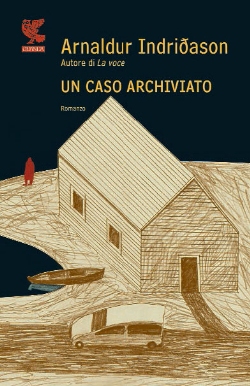
of Arnaldur Indriðason (2010)


Year: 2007 Tr. Lt: 2010 Publisher: Bloomsbury Publishing Translation: Silvia Cosimini Pages 304, paperback ISBN: 978-88-6088-108 - 3

On a cold autumn evening, in Iceland, a woman is found hanged in his summer house Ðingvellir. Everything seems to confirm the only plausible hypothesis: suicide. But when Erlendur Sveinsson, the Reykjavik police detective, is in possession of the recording of a seance at which she had attended shortly before his death, proves the overwhelming need to know its history and find out why his life ended so sudden and so tragic.

We now come to the sixth novel for Bloomsbury Publishing Indriðason translated into Italian by Silvia Cosimini always excellent. After "Under the city " , "The Woman in Green (the best of all, in my humble opinion) ," A body in the lake "," The Voice "and" A great freeze ", this 'last' A case filed ", 2007, gives us a Indriðason attracted by the theme of the border between life and death. Not that this issue was far from the Author, to whom the theme of mourning has always been expensive, as much as one, contiguous above, the "missing persons" (as the agent Erlendur brother, lost in a snow storm on the heath of Eskifjörður back in the '50s). In the latter novel, however, the boundary between life and death touched the strings of the metaphysical. We would not expect, in fact, that a narrator usually so dry, rational, even convene between the characters of the medium, to which the victim, Mary, is aimed at reconciliation with the father died in an unfortunate accident at sea. Once past this first moment of disorientation, especially for a faithful reader and "total" of Indriðason, like myself, the novel melts like ice water lakes in Iceland, and started taking his family's rhythm, tight, lit by fine dialogues from psychology, such as that, really memorable, and Tryggvi Erlendur between the homeless. This dialogue can not help but quote a part:

" To tell the truth I have not felt a moment of peace since that time," said the coach watching Tryggvi departing to Keflavik. "I always feel the need to go somewhere, as if waiting for something or someone waiting for me, but I do not know where and I do not know who he is and I do not know where I'm going." "What do you think is what you expect?". "I do not know. You think I'm crazy. People think it's weird. "

"I met people more weird," said Erlendur.

Tryggvi continued to watch the bus to Keflavik.

"Are not you cold?" He asked again.

"No," said Erlendur.

"It 's a strange feeling watching people part "Tryggvi continued after a long silence. "Seeing them get on the bus and the bus goes, There are people from morning till night."

"Do not you ever want to get on and go somewhere?"

"No, I never go anywhere," said Tryggvi. "Imagine. I do not I take away from a bus. Where will these people? Dimmelo.Dove is going to all these people?. "(P. 152, 153).

An exchange of blows This guy has an almost philosophical-Platonic dialogue, dare I say, and is not a trivial matter if we consider that the dialogue takes place in the bar of a bus station on the outskirts of Reykjavik, one autumn evening. The novel unfolds along multiple narrative threads, which are always intertwined and knotted around the theme (almost obsessive) of the disappearance of the "disappearance" of the item most beloved (who is a son or a brother or a father, no matter ). Childhood trauma and its unimaginable and unthinkable are becoming the backdrop to the writing of the substance and Indriðason and soak up the bottom of his bones. Humanity Nordic described Iceland is sore from our humanity, crossed by Shakespearean passions, but in less experienced, without jealousy, petty competitiveness, adulterers consumed in the country house on the lake Ðingvallavatn, or within the group of cynical medical students who want have fun doing "experiments" Induction of the death on poor, young Tryggvi. Slowly, page after page, we'll blend the ghosts of the "Spirit" that had made the front pages of the book disturbing, making them unlikely to move towards a theme of "supernatural" and Indriðason, with his usual mastery Nordic rational, we will get off with feet on the ground human feelings, the only "ghosts" who can hate and destructiveness. Essential in this slow, inexorable toning to reality, will become the key figure of Leonora, the mother of Mary authoritarian, consumed by jealousy and custodian, together with the daughter of a terrible secret that Erlendur ostinerà is trying to reveal, finally succeeding . Although less compact linear precedents, the latter effort of the Icelandic writer, reading is proposed as necessary to accommodate a further element of the epic erlenduriana. Wedge that fills with meaning is also the story "historical" life of the protagonist, in particular the relationship with the two troubled children, Sindri and Eva Lind. After so much suffer, at least this ratio in the novel will find its reconciliation, told with rare poetry in the narrative sequence of long picnic eaten on the lake with his daughter. Paper jagged, shimmering, rolling and contrasted as the Icelandic landscape, which is the background, "a case that is a work of which you should read, not before, however, that he thoroughly enjoyed the unmistakable aroma of the novels earlier.

Sunday, January 2, 2011

Lifetime Fitness, Negotiate The Fees?

Let me in, Matt Reeves (2010) A


In a suburb of Los Alamos, New Mexico (USA) the discovery of corpses bled completely forcing the police to grope, as usual, in the thickest darkness. Ritual murder? A serial killer? While in the neighborhood fear begins to drift, a local boy, Owen, dreams of being able to avenge the sorpusi put in place against him, by his classmates. But Owens finally finds a friend, Abby, a contemporary who has just moved into the neighborhood. Soon the two become more than just friends. There is something wrong with Abby: Her face is very pale, dark hair and big eyes. A bad smell, does not suffer at all the cool Los Alamos, where jumps seems to fly and, above all, you can meet only at night.

A mandatory premise: to watch this film by Matt Reeves be put in place an advance of "voluntary removal". And 'necessary, that is, pretending that he had never seen the film before (Lat den Ratte Komma in , 2008) by Tomas Alfredson, adapted from the cult novel by John Ajvide Lindqvist. Operation is not easy, I know, almost impossible, because it is not easy to command the absolute abstinence to our preconscious, but essential if one wants to give "to Caesar what which is Caesar's. " The film by Matt Reeves (" Cloverfield " 2008) is set in Los Alamos, New Mexico, today. Los Alamos is at an altitude of 2,200 meters, in the middle of the Jemez Mountains in northern New Mexico, so is understandably cold, and probably for such reasons that the locations were concentrated here. set the story of Lindqvist United States demanded that a place that gets close to the environments described in the book. What we see in the film is, in fact, we might say, "isomorphic" to what we find in the book, though far from the atmosphere that can evoke the Swedish winter landscape that surrounds the Blackeberg suburb of Stockholm, in the 80s ( the novel, however, remember, 2004). There is a child, Owen, played by Kodi Smit-McPhee , tenderly grim and thoughtful, with ashen eyes those two have little to do with her hair tufts that shoot blacks here and there. Then there is his neighbor, a mysterious little girl, Abby, (Chloe Moretz), who lives with his elderly father, and with which Owen makes friends in the cold evenings spent in the courtyard, on the rides, talking shyly, while Abby solves a Rubik's Cube speed disturbing Owen. Abby also does not seem to suffer the cold, since walking barefoot in the snow, as if nothing had happened. However, terrible things happen as inexplicable in Los Alamos: bled corpses are discovered in the woods full of snow, and soon we will know that the maker of such sinister maneuvers is nothing more than the father of the girl. Abby is not human, and the stormy quarrels between her and the father in the home, they begin to worry even Owen, when, in his evenings alone, lying in his bed, he hears the other side of the wall, screaming just inhumane stand up to the ceiling. Everything goes through narrative delicate, intimate, by Reeves, until we see gray eyes and malignant Abby observe the corpse of a victim who has just killed herself, and of which he drank the blood, in a dark tunnel into disuse. Abby is a vampire. A vampire from the appearance of a thin and awkward pre-adolescent trembling, but in reality has hundreds of years, and uses a sort of "butler" human, the false "father," to get his favorite food hemoglobin. Another dramatic turn in the script can be observed in the sequence (well thought out, well-shot) of the incident at the petrol station. Here Reeves shows one of the most valuable things in the film, though dripping with "American" a mile away, and while placing the polar opposite of a text as the original Lindqvist, knows how to integrate so much European literature and postmodern American taste, never anything else. It does so by manipulating a cast absolutely Yankees, as rightly must one do well by entering a Jewish flavor in the physical characterization of Elias Koteas, the policeman, with those glasses blacks, most American-yddish could not. Another sequence is very well built as the dialogue between Abby and her father horribly disfigured on the windowsill, in the hospital. Owen then the child is less "Swedish" that could be found, just as Abby is very, very oversized (culturally speaking) Lindqvist than Eli's. Also good idea to change the names of the characters, just to give the idea of \u200b\u200ba slavish interpretation does not matter too much "other" can be absorbed as such, tout court, in the script. This is in fact "Let me in": a liberal interpretation, key all-American, moving novel of the Swedish horror writer. At this point we can also suspend the operation of "voluntary removal" which suggests the beginning. Reeves's film has nothing to do with the film Alfredson, who has an entire thickness of Europe. A film that has behind it the whole European Kultur. And the film of Reeves is aware of not having. And 'that is a movie humble, who can stay within its boundaries, down to earth, while placing the legitimate objective to play a fictional text, translating it into images. Giacchino's music and photography dark, but poor contrast Greig Fraser, gently wrap a narrative fabric aware of its limits, but who can also be very appropriate in telling the "American brothers" throughout European history. "Let me in": to see, after removing Alfredson, little Oskar, and, above all, the great Eli, Lina Leandersson, the most memorable of that cast.
Directed by: Matt Reeves Screenplay: Matt Reeves Photography: Greig Fraser Music: Michael Giacchino Cast : Chloe Moretz, Kodi Smit-McPhee, Richard Jenkins, Jimmy Pinchak, Sasha Barrese, Chris Browning, Cara Buono, Elias Koteas, Seth Adkins, Rachel Hroncich, Dylan Minnette Country: UK, USA Production : EFTI, Goldcrest Postproduction London, Hammer Film Productions Year: 2010 Length: 110 min .